
Relieving Muscle Spasms Without the Pain: The GTO Release
At WoVe MT here in Bradford, treating severe muscle spasms is a daily occurrence. However, there are times when massaging directly over a spasm is simply too uncomfortable. Fortunately, we can utilize specialized static pressure techniques to get the muscle to relax without causing further pain. One of the most effective approaches is the Golgi Tendon Organ (GTO) release.
This kinesiology technique seems to have originated with physiotherapists and is an incredible tool for pain management. Here is a look at the science behind this technique and what you can expect during your treatment.
What is a Golgi Tendon Organ?
To understand how the technique works, you first need to understand the anatomy of your tendons.
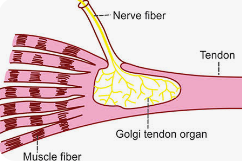
- The Golgi tendon organs are proprioceptive nerve receptors or minute sensory organs located in the tendons near the junction with the muscle.
- Hundreds of these receptors detect the “load” placed on the tendons.
- They act as a muscle tension-monitoring system.
- Golgi tendon organs are also part of a protective reflex to prevent muscle injury or rupture through relaxation of the muscle.
- This reflex is activated when an excessive load or stretch is placed on a tendon.
The Science of the “Lengthening Reaction”
When your muscle is tight or in spasm, your nervous system is actively keeping it that way.
- Specifically, alpha motor neuron firing maintains muscle contraction.
- The Golgi tendon organ is able to slow this alpha neuronal firing, causing relaxation of the muscle.
- This inhibitory effect on muscle contraction is referred to as the lengthening reaction.
- Because of this reaction, GTO release can be used to reduce muscle spasm and tone, especially when on-site massage is too painful.
What Does the Treatment Feel Like?
Because the goal is to trigger a reflex rather than forcefully rub a knot out, the technique is highly specific and methodical.
- Direct compression placed on the tendon near the junction with the muscle will yield the best results, as this is the area of greatest Golgi tendon organ concentration.
- The therapist uses reinforced thumbs or fingers, holding for a minimum of 30 seconds or until the muscle relaxes.
- The tendon may also be bowed into an “s” or “c” shape.
- The rate is slow and the pressure is moderate to deep.
- Muscle tension or spasm may be reduced by applying approximately two pounds of pressure on the Golgi tendon organs in the tendon in a direction away from the belly of the muscle.
- The technique is most effective on muscles whose tendons are long and easily palpable, such as the Achilles tendon and hamstring tendon at the ischial tuberosity.
- It is also used on the suboccipital tendons between the occiput, C1 and C2.
When Should This Technique Be Avoided?
While incredibly helpful for spasms, this technique is not appropriate for every situation.
- Contraindications to GTO release are locally painful conditions or local acute conditions affecting the tendon to be treated.
- It is not performed on hypotonic or atonic muscles.
- The technique is avoided in cases of tissue fragility, pathologies of connective tissue, and skin lesions including healing incisions.